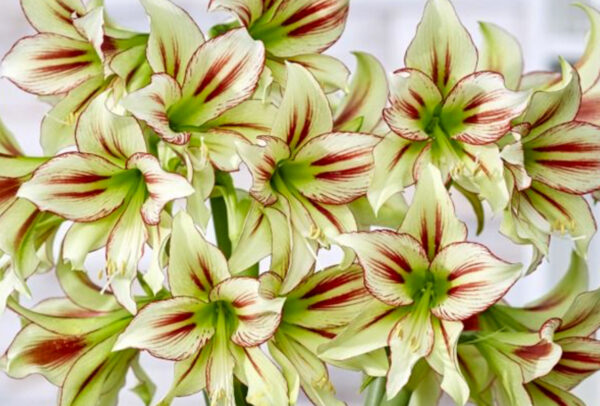
The “Semi-Hardy” Amaryllis, Cleopatra
$ 18.00
Rare & Real
Stones
MagLock
Clasp
6-Month
Warranty
Authenticity
Certificate
 Free Shipping on
all orders
 COD Available
 No questions
asked refund
 Easy size
 exchange process
 Express shipping
 available
 Great Customer
Support
Description The “Semi-Hardy” Amaryllis, Cleopatra Believe it or not, the beautiful flower that we all know as the Christmas-blooming or winter-blossoming Amaryllis is not an Amaryllis. It is an Hippeastrum, native to South America and discovered in Chile in 1828. Amaryllis and Hippeastrum are native to various parts of the subtropics and tropics. The hardy, Amaryllis belladonna, AKA ‘Naked Ladies’, ‘Belladonna Lilies’, ‘Resurrection Lilies’ or ‘Magic Lilies’ are native to South Africa. The Cybister Amaryllis were developed by the legendary, San Diego plant breeder, Fred Meyer, from amaryllis varieties collected in Brazil. Amaryllis began to enjoy popularity during the Victorian era and have continued to grow in popularity. Tropical Amaryllis have become one of the most beloved blooming houseplants now in commercial cultivation. Their gigantic, opulent blossoms bring unequalled beauty and joy to any environment during the dreary days of winter. The hardy Amaryllis are growing in popularity because of their unique bloom time (early fall) and vivid colors. Cybister Amaryllis are a relatively recent introduction and are growing in popularity with Amaryllis connoisseurs. Amaryllis can put on a show for the casual observer for months, and for loved ones who are house-bound or children, the growing of an amaryllis adds intrigue, excitement and joy to each and every day. Growing Amaryllis For best results, soak, ROOTS ONLY, for 12-24 hours by balancing the bulb on a jar of tepid water. Do not soak the bulb itself because it may cause the bulb to begin to rot. Depending on the size of the bulb, plant in a 6-8 in. diameter pot. Use a rich, heavy potting soil that drains easily and add some slow release fertilizer. Check out the soil mix described in detail in our Harvesting History YouTube video. Do not use prepared soil mixes. The Best Soil Mix for Containers Position the bulb so that its nose is above the rim of the pot and its shoulders are above the soil. Place the potted bulb in a warm, light-filled spot free from drafts. Allow the soil to dry out on top before watering. When the first shoots appear, begin to water with a half-diluted, blossom booster fertilizer. When the buds start to open, move the pot to a cooler area to prolong the bloom. It will take 6-10 weeks to produce blossoms. Once the plant has flowered, cut off the spent flowerheads and continue to fertilize and water the plants throughout the summer into the fall. Do not cut off the leaves. Pots should be maintained outside for the entire summer into the fall in full sun. Before there is any danger of frost, bring the pots inside and store them in a cool (approximately 55 degree temperature) area. Water very lightly, leaving the soil barely moist. Do not fertilize and leave the plants for about 10 weeks. At the end of 10 weeks, bring the plants into a warm environment (approximately 70-84 degrees) and cut off any remaining foliage leaving 1-2 inches above the neck. Begin regular watering with a blossom booster fertilizer and keep in as sunny a place as possible. Amaryllis do not like to be transplanted. It is recommended that each year you remove about 2 ¼ inches of soil from the top of the pot and replace it with a rich mixture of 1 part soil, 1 part composted manure or compost and 1 part peat moss. Note that bulbs with less than 4 leaves will probably not produce a flower. Also note that most bulbs, before being sold, are heavily fertilized to produce the largest blossoms possible. Because of this, most bulbs do not produce another flower for 15-18 months. After this ‘initiation’ period, Amaryllis bulbs usually bloom yearly.